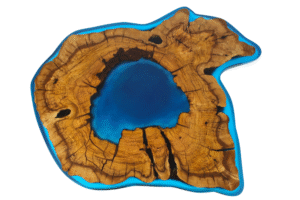
🌿 Bring a Piece of Crete to Life with Handcrafted Olive Wood Creations
There’s a certain magic in olive wood — a warmth, a history, a quiet strength that you can feel the moment you hold it. Every board I craft begins long before it reaches my workshop. Its story starts under the Mediterranean sun, on the island of Crete, where olive trees have stood for centuries.
🌞 Where the Story Begins
In Crete, olive trees aren’t just part of the landscape — they’re part of the culture. Families care for them the way others care for heirlooms. Many of the trees that produce the wood I use are older than the villages around them. They’ve survived storms, droughts, and generations of hands tending to them.
The wood I source never comes from trees cut down for timber. Olive trees are far too precious for that. Instead, the wood is collected from branches that have naturally fallen or from trees that have reached the end of their fruit-bearing life. Nothing is wasted; everything is respected.
🚢 The Journey Across the Sea
Once selected, the wood is carefully dried — a slow, patient process that can’t be rushed. Olive wood is dense, full of character, and full of natural oils, so it needs time to settle. Only when it’s ready does it begin its journey from Crete to me.
Every shipment feels like receiving a piece of the island itself. The moment I open the crates, the scent hits me — warm, earthy, slightly sweet. It’s the smell of sun, soil, and time.
🪵 Why Olive Wood Matters to Me
Working with olive wood is different from working with any other timber. Its grain is unpredictable, wild, and expressive. No two pieces ever look alike. Some boards carry swirling patterns like smoke; others have bold, dramatic lines that look like brushstrokes.
For me, it’s not just material — it’s a collaboration with nature. My job is to reveal the beauty that’s already there.
🔨 From Ancient Roots to Modern Craft
When I shape this wood into cutting boards, serving boards, or display pieces, I’m always aware of the story behind it. Every finished piece carries a bit of Crete with it — the history, the climate, the resilience of the trees, and the care of the people who tend them.
And when someone brings one of my boards into their home, that story continues. It becomes part of their kitchen, their meals, their family moments.
🌿 A Piece of the Mediterranean in Every Board
Sourcing olive wood from Crete isn’t just a supply chain decision. It’s a promise:
To honour the material.
To respect the land it comes from.
To craft something that feels alive.
Every board I make from this wood is unique — not because I design it that way, but because nature already did.
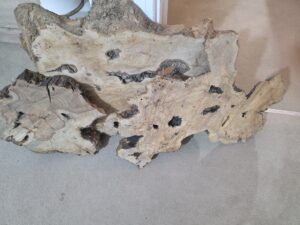
These slabs arrived from Crete, each one telling its own story. The grain is unpredictable, the voids are natural, and the edges are untouched. I don’t see flaws — I see potential.
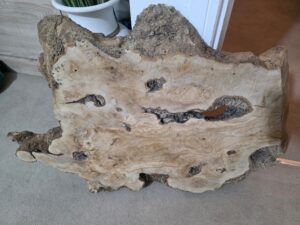
This piece leaned against the wall for days before I touched it. I kept walking past it, letting it speak to me. That’s how I work — I don’t force the design. I wait for the wood to reveal it.
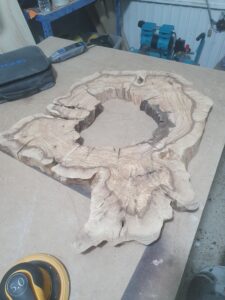
Here’s where the transformation begins. The void in the center? That’s not a problem — it’s a canvas. I often pour resin into these spaces, creating contrast between nature’s chaos and human precision.